
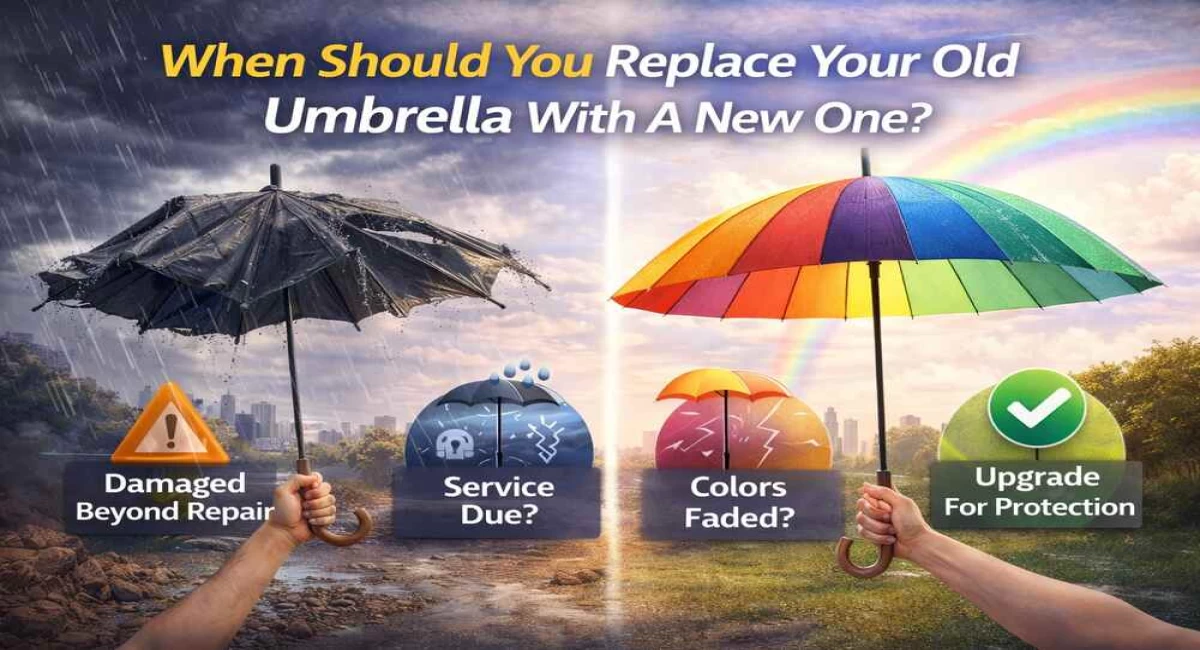
Most people keep using the same umbrella for years without thinking twice. But when does a reliable rain shield turn into a daily frustration? Many wonder if a few broken ribs are harmless, if small leaks really matter, or if replacement is just a waste of money.
This blog by promotional umbrella manufacturers in Delhi is all about when an umbrella has reached the end of its useful life, how to spot warning signs, and why timely replacement makes every day travel easier.
• Old umbrellas show warning signs through leaks, weak frames, and sticking mechanisms
• A failing umbrella reduces comfort and can create safety issues in wind
• Regular inspection helps you spot problems before sudden breakage
• Replacement depends more on condition than age alone
• Choosing strong materials and caring for the umbrella extends its useful life
• A reliable umbrella should feel trustworthy every time you carry it
An umbrella faces constant stress. Wind pressure strains the frame. Rain and sun weaken the fabric. Opening and closing the mechanism creates gradual wear.
The fabric can thin out and lose its water resistance. The metal ribs may bend or loosen. The handle and locking system can become unstable.
A damaged umbrella does more than let a few drops through. It reduces protection and increases frustration during travel. You may arrive wet to work or an event.
There is also a comfort factor. A smooth opening mechanism and solid grip make daily use easier. Replacing an aging umbrella improves reliability and reduces stress during unexpected rain.
Have you noticed dark wet spots forming on the inside? That is a clear sign the waterproof coating is fading. Over time, repeated exposure to rain washes away protective layers.
Once the fabric starts absorbing water, drying takes longer and mildew can develop. A leaking umbrella defeats its main purpose.
A strong umbrella should handle light wind without collapsing. If the ribs bend or twist during normal use, the structure has weakened.
Even if you can bend it back into shape, the metal has lost strength. Repeated stress increases the chance of sudden breakage. This is a practical signal to consider a new one.
An umbrella should open smoothly with one motion. If it sticks, requires force, or refuses to lock properly, internal parts are wearing out.
This problem often worsens quickly. A jammed umbrella in heavy rain is more than annoying. It leaves you unprotected at the worst moment.
Check the joints where the ribs connect. Loose screws or cracked plastic pieces reduce stability. A single damaged rib can affect the entire structure.
Temporary fixes may work for a short time, but they rarely restore full strength. When multiple joints feel weak, replacement is the safer choice.
A wobbly handle makes the umbrella harder to control in wind. It can also signal deeper structural wear inside the shaft.
A secure grip is important for comfort and safety. If tightening does not fix the issue, the umbrella is nearing the end of its life.
Persistent odor suggests trapped moisture and possible mold growth. This happens when fabric no longer dries efficiently.
Besides being unpleasant, mold can damage material and affect hygiene. A fresh umbrella eliminates this concern.
Choosing a new umbrella by garden umbrella manufacturers in Delhi is not just about appearance.
Look for strong frame materials such as fiberglass or reinforced steel. These handle wind better than thin metal.
Water resistant fabric with quality stitching improves durability. A comfortable handle and smooth opening action add convenience.